
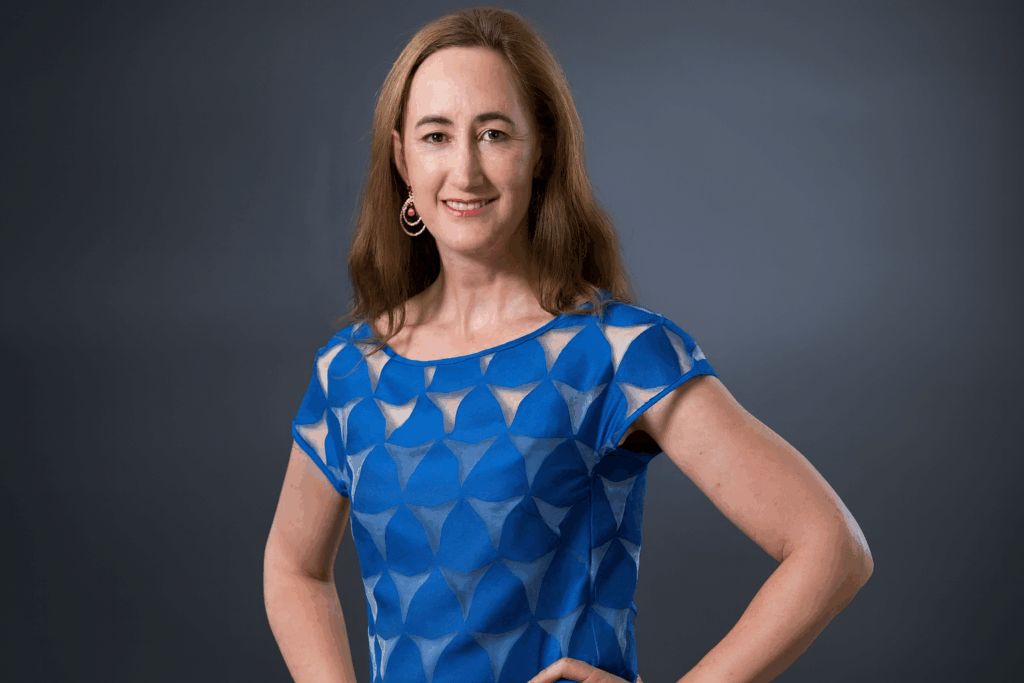
Sophie Kinsella, the internationally bestselling novelist whose “Shopaholic” series transformed early 2000s commercial fiction, has died at 55 from glioblastoma, her family said Wednesday. The author, born Madeleine Sophie Wickham, received her diagnosis in 2022 but wrote through her illness, publicly revealing only limited details until last year.
Her death was announced on Instagram, where relatives said they were “heartbroken to announce the passing this morning of our beloved Sophie (a.k.a. Maddy, a.k.a. Mummy).” The statement said she “died peacefully, with her final days filled with her true loves: family, music, warmth, Christmas, and joy.” Her family described their grief as immeasurable, saying they “can’t imagine life without her radiance and love.”
Wickham had spoken candidly over the past year about her treatment, explaining that she underwent surgery, radiotherapy, and chemotherapy after learning she had glioblastoma — one of the most aggressive brain cancers. She told readers in 2024 that she considered her latest novel, What Does It Feel Like?, her “most autobiographical work to date,” reflecting the emotional terrain she navigated during her illness.
Kinsella rose to global prominence with the 2000 release of Confessio. Following her early disclosures about illness, Kinsella’s literary journey is notable. She rose to global prominence with the 2000 release of Confessions of a Shopaholic, a humorous portrait of financial chaos and consumer temptation centered on Becky Bloomwood, a young journalist whose shopping habit repeatedly outpaces her salary. The book’s upbeat tone and tightly drawn sense of chaos helped define an era of comedic women’s fiction, leading to a long-running series and a 2009 film adaptation starring Isla Fisher. Each follows Becky’s evolving relationships, career misadventures, and attempts at self-improvement. Kinsella also published a string of popular standalone novels, including Can You Keep a Secret?, The Undomestic Goddess, Twenties Girl, and the 2023 release The Burnout broaden her readership among young adults and longtime rom-com enthusiasts. Her books sold more than 45 million copies in over 60 countries, establishing her as one of the most commercially successful female novelists of her generation.
Outside her writing career, Kinsella kept a relatively private personal life. She married Henry Wickham in 1991, and the couple shared five children — sons Freddy, Hugo, Oscar, and Rex, and a daughter, Sybella. Friends and fellow authors frequently described her as warm, self-effacing, and deeply committed to her family, qualities that often shaped the optimistic sensibility of her work.
Her final published project, What Does It Feel Like?, centered on Eve, a novelist who wakes to discover she has a brain tumor. In discussing the book on Good Morning America, Kinsella said, “I just thought people might be curious to know what it feels like to go through this. It’s funny in parts, it’s sad in parts, but I hope it’s full of optimism and love most of all.”
The family’s announcement noted that, despite her illness, Kinsella “took nothing for granted and was forever grateful for the love she received.” They wrote that she faced her diagnosis “with unimaginable courage,” and that her gratitude for her readers remained constant. “She will be missed so much — our hearts are breaking,” the tribute read.
Kinsella’s impact on contemporary romantic comedy writing is widely regarded as transformative. Literary critics have credited her with redefining the genre for a millennial audience by giving flawed, self-aware heroines center stage and blending humor with emotional sincerity. Even as her stories leaned into escapism, they reflected anxieties about adulthood, ambition, and self-acceptance that resonated across generations.
Her death closes a chapter in popular fiction, but her novels — filled with wit, vulnerability, and the joyful chaos of imperfect women — remain embedded in readers’ imaginations around the world.