
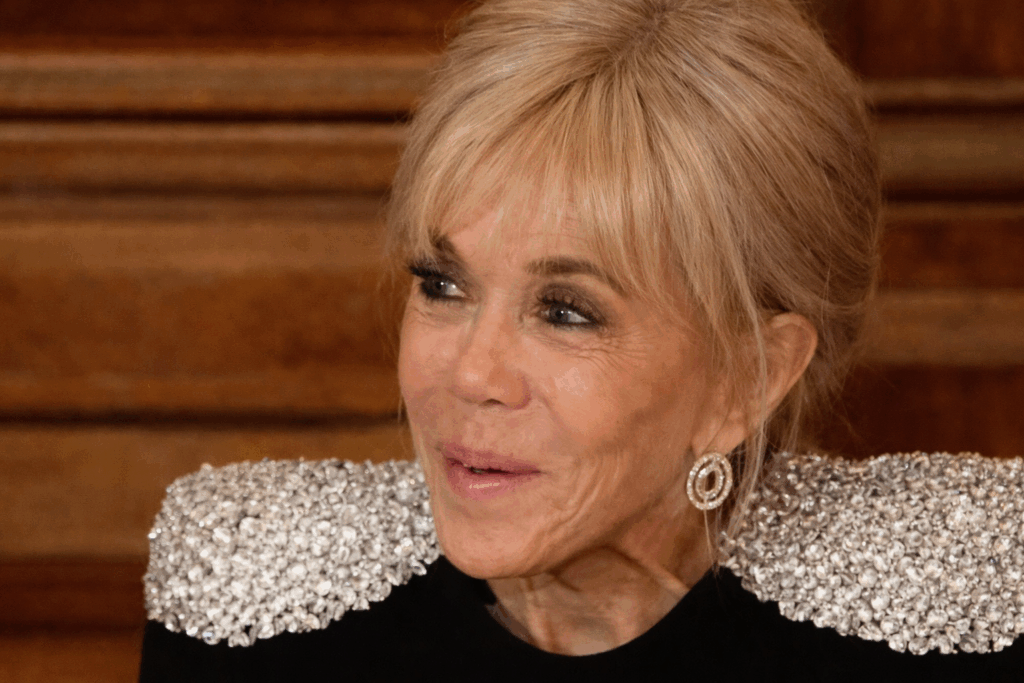
A Paris criminal court on Monday delivered a significant legal rebuke to online conspiracy theories by convicting 10 people of cyber-harassment for spreading false and malicious claims about France’s first lady, Brigitte Macron, falsely alleging she is a transgender woman.
The defendants — eight men and two women whose specific affiliations or motives were not detailed in court — were found guilty of repeatedly publishing and spreading accusations that questioned Brigitte Macron’s gender and sexuality. These included false claims intertwining her 24-year age gap with President Emmanuel Macron and allegations of criminality. France Info reported that they received suspended sentences of up to eight months in jail and additional penalties for harassment.
These conspiracy theories, circulating online for years, falsely alleged that Brigitte Macron was born under the name Jean-Michel Trogneux — in reality, the name of her older brother. While the Macrons largely ignored such claims for much of President Macron’s time in office, the persistence and global spread of the rumors eventually prompted the couple to take legal action in multiple jurisdictions. This context underscores the significance of the recent convictions.
Monday’s ruling also marks a notable victory for the Macrons as they continue to pursue a separate, high-profile defamation lawsuit in the United States against right-wing influencer and podcaster Candace Owens, who has publicly repeated the same claims. That civil case, filed in Delaware, remains pending, and no trial date has yet been scheduled, according to U.S. court records.
French prosecutors emphasized that the case was not merely political commentary but a decisive stand against sustained cyber-harassment intended to degrade Brigitte Macron and inflict psychological harm. The court’s ruling directly addressed this harm, underlining the legal system’s commitment to protecting personal dignity from coordinated online attacks.
This ruling comes amid growing scrutiny in France over online abuse and misinformation, particularly when it involves coordinated harassment campaigns on social media platforms. As such, legal analysts say the case reflects the judiciary’s increasing willingness to hold individuals accountable for cumulative harm caused by repeated online attacks, even when those attacks are framed as opinion or commentary.
Speaking to French broadcaster TF1 on Sunday night, on the eve of the verdict, Brigitte Macron said her decision to fight back was motivated not only by personal distress but also by a desire to set an example for others facing online harassment. Her comments provided personal insight, bridging the public and legal challenges she faced. She described the attacks as relentless and invasive, saying they extended beyond rumors to include direct interference in her personal records.
“The online attacks against me seemed endless,” she said, adding that they included “people who broke into my tax website and modified my identity.”
Brigitte Macron also rejected claims questioning her gender, pointing to official documentation that she said had been deliberately ignored by her attackers. “A birth certificate is nothing,” she said. “It is a father or a mother who goes to declare their child, who says who he is or who she is.”
She framed her legal fight as part of a broader effort to address cyberbullying, particularly among young people. “I want to help adolescents to fight against harassment,” Brigitte Macron said. “And if I do not set an example, it will be difficult.”
President Macron has previously spoken about the toll such harassment has taken on their family. He described a sense of helplessness in the face of persistent online abuse. French officials say the case highlights how quickly misinformation can spread across borders and platforms. This happens even after repeated debunking by courts and independent fact-checkers.
Advocates against cyberbullying see Monday’s convictions as a crucial warning: spreading falsehoods that target personal identity, even if repeated online, can have serious legal repercussions. For the Macrons, this verdict strengthens their wider effort to push back against conspiracy theories and protect public figures from coordinated digital harassment.