
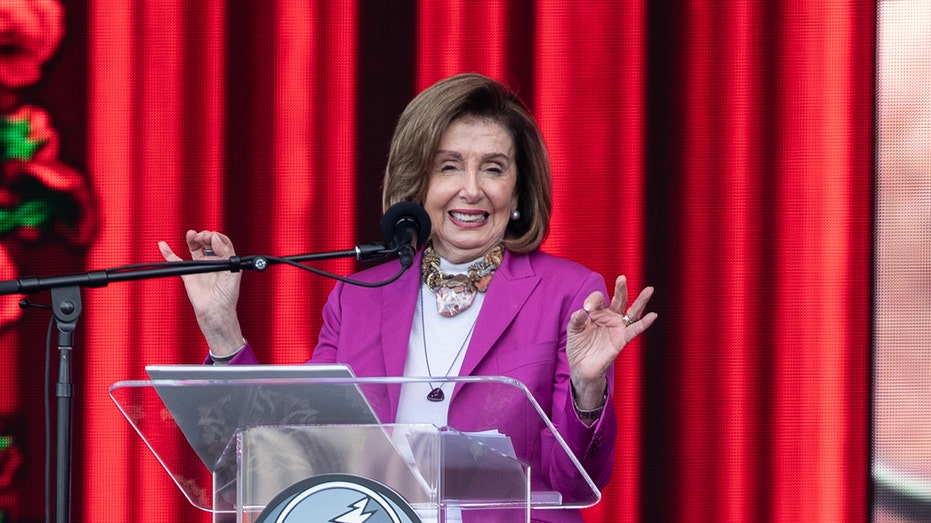
SAN FRANCISCO, Calif. — Former House Speaker Nancy Pelosi, a self-described “Deadhead,” faced a wave of criticism on social media after her appearance at a tribute event honoring Bob Weir, co-founder of the iconic rock band the Grateful Dead. The memorial celebration, held Saturday at San Francisco’s Civic Center, gathered thousands of fans, musicians, and political figures to commemorate Weir’s legacy following his death earlier this month at age 78.
Pelosi, 85, delivered remarks on stage and appeared to sing along as musician John Mayer performed the Grateful Dead classic “Ripple.” However, some attendees and online observers noted that Pelosi’s demeanor and bright magenta suit choice seemed out of place for the somber occasion. During her speech, Pelosi appeared to stumble over her words while reflecting on Weir’s impact on music and culture, which fueled a backlash across various social media platforms.
The former Speaker’s presence at the event highlighted her long-standing connection to the Grateful Dead community, a group often referred to as “Deadheads.” Pelosi has previously identified as a fan of the band, which has a deep-rooted history in San Francisco’s music scene. Despite this, critics questioned her behavior, suggesting it detracted from the tribute’s intended tone.
The event itself was a significant gathering, drawing attention from both cultural and political circles. Bob Weir’s contributions to American music have been widely recognized, and the memorial served as a testament to his enduring influence. The celebration included performances by notable musicians and heartfelt speeches from those who knew Weir personally.
Pelosi’s appearance at the tribute comes amid a period of heightened scrutiny over public figures’ conduct at cultural events. The reaction to her speech and attire underscores the complex intersection of politics, music, and public perception. While some defended her participation as a genuine expression of fandom, others viewed it as a misstep.
As the conversation continues online, it reflects broader discussions about the role of politicians in cultural commemorations. The Library of Congress archives numerous events that blend political and cultural history, underscoring the significance of respectful engagement in such settings.
San Francisco’s Civic Center, a historic venue for major public gatherings, has hosted countless memorials and celebrations, emphasizing the city’s role as a cultural hub. The City and County of San Francisco often facilitates events that honor influential figures like Weir, who helped shape the city’s artistic identity.
Meanwhile, the Grateful Dead’s legacy continues to resonate nationwide. The band’s official website and affiliated organizations maintain extensive archives and resources celebrating their music and community impact. Fans and historians alike look to these sources to preserve the spirit of the band.
Pelosi’s involvement in the tribute, despite the controversy, highlights the enduring connection between politics and popular culture. It also serves as a reminder of the careful balance public figures must strike when participating in events that hold deep emotional significance for communities.
For more on the intersection of politics and cultural events, the U.S. Government’s official portal offers resources and information on public ceremonies and commemorations.
As the public continues to reflect on Bob Weir’s legacy and the tribute event, the discourse around Pelosi’s role exemplifies the challenges faced by prominent figures navigating the expectations of diverse audiences.