
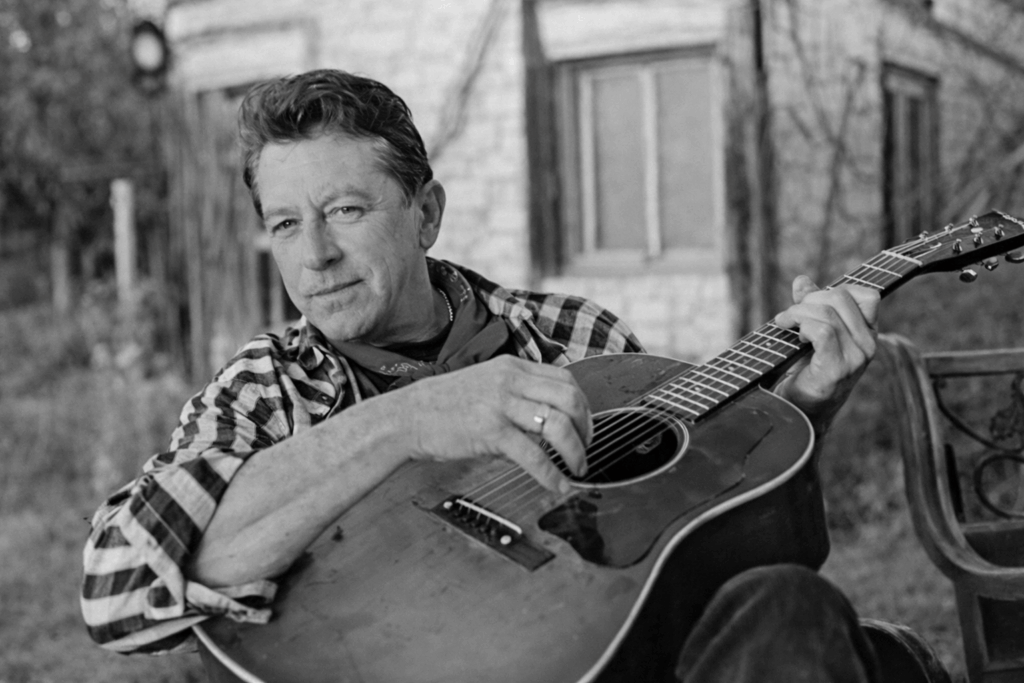
Joe Ely, the revered West Texas songwriter whose fiery blend of rock, country, and folkloric influences helped transform Austin into a major center for American live music, died Monday at his home in Taos, New Mexico. He was 78. His publicist, Lance Cowan, said Ely died from complications of Lewy body dementia, Parkinson’s disease, and pneumonia.
In September, Ely publicly disclosed his diagnosis of Lewy body dementia and Parkinson’s. He told fans on Facebook that he wanted to share the news “not to dwell in hardship, but to bring understanding, awareness, and hope.” This announcement marked a candid reflection from a musician known for introspection both onstage and in his writing. It also explained his decision to scale back touring in recent years.
Across a half-century career, Ely emerged as one of Texas’s most distinctive musical voices. His sound—an untamed combination of honky-tonk, rockabilly, Tex-Mex, blues, and folk—earned critical acclaim even as it defied commercial formulas. Radio programmers often struggled to categorize him, yet fans embraced the fusion that reflected the cultural landscapes of Amarillo, Lubbock, and Austin. As a songwriter, Ely crafted stark, cinematic narratives reminiscent of Cormac McCarthy, most notably on works such as Letter to Laredo and “Me and Billy the Kid.” He also championed the songs of fellow Texans, helping elevate the work of Butch Hancock, Jimmie Dale Gilmore, and Robert Earl Keen, whose “The Road Goes On Forever” Ely recorded in what many consider its definitive version.
Born in Amarillo in 1947, Ely grew up in Lubbock after his father’s early death. By his teens, he was performing in local bands before dropping out of high school at 16 to travel, taking odd jobs as a circus hand and fruit picker while playing music around the world. His return to Lubbock in the early 1970s resulted in the formation of The Flatlanders with Hancock and Gilmore, a short-lived but highly influential trio whose lone 1972 album would later be hailed as a cornerstone of Texas songwriting. “It didn’t last long,” Ely told The Dallas Morning News in 1995. “It was almost like those little dust devils that form on a hot day… we came together for about a year, spun around, did a record, and then spun off.”
After striking out on his own, Ely formed a road-tested band featuring steel guitarist Lloyd Maines and secured a contract with MCA Records. Though his early albums sold modestly, they were widely praised for their innovation. His relentless touring earned him the nickname “Lord of the Highway,” and his reputation soon crossed the Atlantic. While performing in England, his live-wire energy caught the attention of The Clash, who recruited him to open shows and to appear—singing in Spanish—on their 1981 hit “Should I Stay or Should I Go.” Ely later joked that he felt guilty about the song’s famously mangled Spanish, but the collaboration cemented his status as a boundary-crossing performer.
By the early 1980s, Ely had settled on a ranch outside Austin and became a fixture in the city’s rapidly expanding music scene. His affinity for live performance led him to record multiple concert albums, capturing the intensity that made him one of Austin’s defining voices. Offstage, he remained quiet. His wife, Sharon, once described the contrast: “It’s a little insane. People don’t know he’s introverted. All his energy comes out onstage.”
Throughout the 1980s and ’90s, Ely’s catalog shifted between rock-forward albums and more traditional country storytelling. Letter to Laredo, released in 1995, featured two collaborations with Bruce Springsteen—pairings long anticipated by fans who viewed both artists as kindred chroniclers of regional identity and working-class grit. In 1999, Ely earned his only Grammy as part of the Tex-Mex supergroup Los Super Seven, joining Freddy Fender, Flaco Jiménez, and Rick Trevino.
Ely continued releasing new music into the 2010s, including Panhandle Rambler, a return to his Lubbock inspirations. Reflecting on the region’s ever-present winds, he once told The News, “It blows all the time… it makes you a little restless, it makes you want to move, to create something out of nothing.” He also published a book, Bonfire of Roadmaps, in 2007 and used the pandemic years to finish Love in the Midst of Mayhem, an album shaped by the cognitive challenges he later revealed. “I keep having this weird thing where I wake up, and I don’t know where I am,” Ely said in 2020. “I thought, ‘I need to do something to keep me from going completely batty.’”
His honors reflected his longevity: a 2007 Americana Music Association Lifetime Achievement Award; recognition as Texas State Musician in 2016; induction into the Texas Heritage Songwriters’ Association Hall of Fame the same year; and, in 2022, induction into the Austin City Limits Hall of Fame.
Ely is survived by his wife, Sharon, and their daughter, Maria Elena, named for María Elena Holly, Buddy Holly’s widow. The family will announce funeral arrangements.