
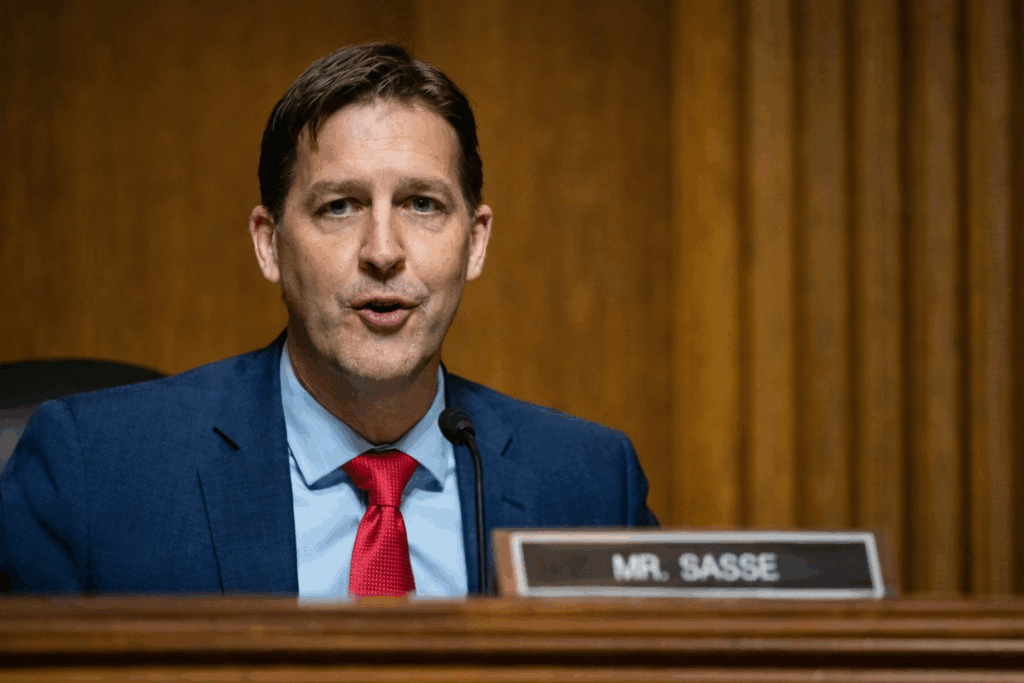
Former Nebraska Sen. Ben Sasse announced Tuesday that he has been diagnosed with metastasized, stage 4 pancreatic cancer. He delivered a blunt and deeply personal account of his prognosis while emphasizing faith, family, and resolve in the face of a terminal illness.
Sasse, 53, shared the diagnosis in a post on X, saying doctors informed him last week that the cancer has spread and is incurable. “Advanced pancreatic is nasty stuff; it’s a death sentence,” Sasse wrote. “But I already had a death sentence before last week, too — we all do.” He added in stark terms, “I’ve been diagnosed with metastasized, stage 4 pancreatic cancer, and am gonna die.”
The former Republican senator acknowledged the gravity of his situation, reflecting on mortality and human vulnerability. In his post, Sasse wrote that the news has forced him to confront the limits of control, even for someone accustomed to leadership and long-term planning. He described drawing strength from close relationships as he processes what lies ahead.
“I’m blessed with amazing siblings and half a dozen buddies that are genuinely brothers,” Sasse wrote. Recounting a comment from one of those friends, he added, “‘Sure, you’re on the clock, but we’re all on the clock.’ Death is a wicked thief, and the bastard pursues us all.”
Sasse served Nebraska in the U.S. Senate from 2015 until early 2023, building a reputation as a conservative thinker willing to challenge party orthodoxy. After his resignation, he became the 13th president of the University of Florida, marking a return to academia following years in national politics. However, his presidency lasted just over a year. Sasse stepped down in 2024 to focus on caring for his family after his wife’s epilepsy diagnosis, which he said was accompanied by significant memory issues.
During his Senate tenure, Sasse frequently clashed with then-President Donald Trump, becoming one of the GOP’s most vocal internal critics of Trump’s conduct. In one significant episode, he was one of seven Republican senators who voted to convict Trump in his second impeachment trial, which stemmed from Trump’s actions related to the Jan. 6, 2021, attack on the U.S. Capitol. Ultimately, Trump was acquitted after the Senate failed to reach the required two-thirds majority.
Sasse’s opposition to Trump drew sharp rebukes from the former president, who labeled the Nebraska Republican a “grandstanding, little-respected senator” during a 2022 campaign rally. The rift with Trump and his allies ultimately led Sasse to decide not to seek reelection and to step away from electoral politics altogether.
Despite the terminal nature of his diagnosis, Sasse emphasized that he does not intend to retreat from public reflection or personal engagement. “I’ll have more to say,” he wrote Tuesday. “I’m not going down without a fight.” He pointed to rapid advances in medical science as a source of cautious hope, particularly in emerging cancer therapies. “One sub-part of God’s grace is found in the jaw-dropping advances science has made in the past few years in immunotherapy and more,” Sasse wrote.
Sasse also wrote about finding meaning in the experience of dying and the use of humor to cope, emphasizing, “Death and dying aren’t the same — the process of dying is still something to be lived.” His household, he said, embraces gallows humor as part of facing the challenge.
Pancreatic cancer remains one of the deadliest forms of cancer in the United States. It accounts for roughly 3% of all new cancer diagnoses. It is currently the third leading cause of cancer-related deaths and is projected to become the second leading cause by the end of the decade, according to federal health data. The disease is notoriously difficult to detect early. There is no single recommended blood test capable of reliably identifying pancreatic cancer at its earliest stages.
“The vast majority of patients who present with pancreatic cancer have advanced disease at the time of their diagnosis,” Dr. Brian Wolpin, director of the Gastrointestinal Cancer Center at Dana-Farber Cancer Institute, told CNN last year. “So 80% or more of patients present with advanced disease. At the time of their presentation, we’re very unlikely to be able to cure the cancer.”
In sharing his diagnosis publicly, Sasse signaled an intention to confront the illness with transparency and reflection, blending realism with faith and resolve. He made clear that he plans to continue engaging with life, relationships, and ideas for as long as he is able.