
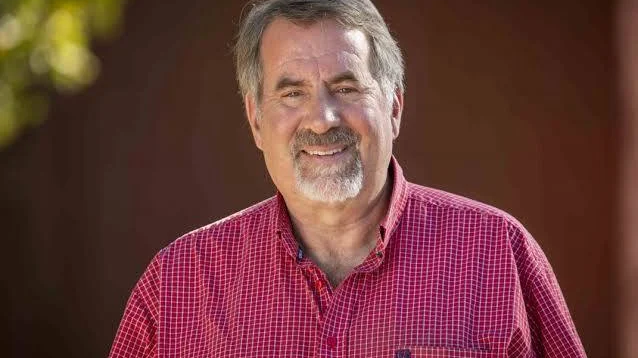
Rep. Doug LaMalfa, a Northern California Republican whose career in public office was defined by agriculture, water policy, and forestry advocacy, has died at the age of 65, according to statements released Tuesday by Republican leaders and his congressional office. His sudden death stunned colleagues across Capitol Hill and further narrowed the GOP’s already fragile majority in the U.S. House.
LaMalfa, a fourth-generation rice farmer, was serving his seventh term representing California’s largely rural 1st Congressional District, which spans the northeastern corner of the state. Over more than a decade in Congress, he developed a reputation as a policy specialist in natural resource management, serving on the House Agriculture, Natural Resources, and Transportation and Infrastructure Committees.
President Donald Trump honored LaMalfa during remarks to House Republicans on Tuesday, describing him as one of the party’s most reliable lawmakers.
“And by the way, he wasn’t a three-o’clock-in-the-morning person,” Trump said, referring to lawmakers who require late-night persuasion on close votes. “With Doug, I never had to call. He was with us right from the beginning.”
In a statement released by LaMalfa’s office, aides said the congressman is survived by his wife, Jill, four children, and a grandchild. The statement emphasized his devotion to his constituents and his long-standing policy priorities.
“He cared deeply for the people he served and worked tirelessly to hold the government to its word to fix our failing forests, build water storage, and leave people to be free to choose what is best for themselves,” the statement said.
Republican lawmakers said LaMalfa’s death was both unexpected and deeply jarring. Several GOP members, speaking on the condition of anonymity to discuss private matters, said they were unaware of any serious health concerns prior to his passing. According to multiple lawmakers familiar with the situation, LaMalfa suffered an aneurysm and later a heart attack after being taken into surgery.
House Speaker Mike Johnson said the loss reverberated beyond party lines.
“We are mourning the loss of our friend and brother today, and we send our respects for his life and work to his wife Jill and the LaMalfa family during this difficult time,” Johnson said in a statement.
LaMalfa’s death instantly redefined the House power balance. Republicans now hold a precarious 218–213 edge, giving Johnson almost no margin for error on party-line votes. Every absence or defection now directly threatens the GOP’s ability to advance its agenda.
Rep. Richard Hudson, who chairs the National Republican Congressional Committee, remembered LaMalfa as both principled and personable.
“Doug brought grit, authenticity, and conviction to everything he did in public service,” Hudson said, also noting LaMalfa’s enthusiasm for motorsports and mechanical projects outside of politics.
Under California law, Democratic Gov. Gavin Newsom has 14 days from LaMalfa’s death to call a special election to fill his seat. The special election could be scheduled as early as mid-May or aligned with the state’s June 2 primary, depending on the timing of Newsom’s announcement. The winner of the special election will serve out the remainder of LaMalfa’s term under the current district boundaries.
LaMalfa’s death comes as his district, targeted in recent redistricting and approved by voters last year, shifts from a Republican stronghold to a more Democratic-leaning seat.
LaMalfa had publicly criticized the redrawing of the lines, calling the process anti-democratic, but vowed to remain engaged with voters as the political terrain shifted.
“We’ve had a long-term relationship with people in northern California, and we’re not just going to walk away from that,” LaMalfa told POLITICO last month.
Before his time in Washington, LaMalfa served in California’s state Assembly and later the state Senate, bringing his farming background into policymaking roles focused on land use, water rights, and wildfire prevention. Friends and colleagues often described him as deeply rooted in his community — a lawmaker whose identity as a farmer shaped his legislative approach.
LaMalfa’s passing leaves a personal void and heightens political uncertainty as razor-thin margins and new districts shape the road to November.