
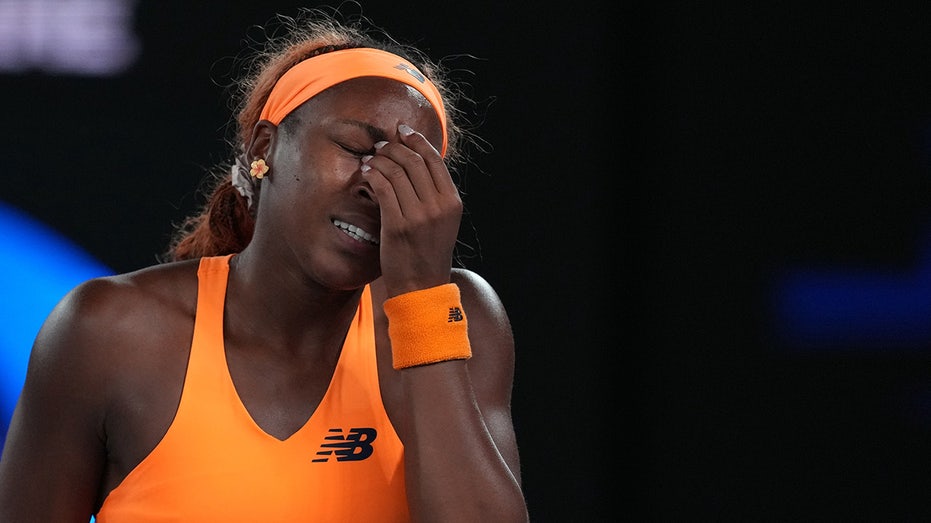
MELBOURNE, Australia — American tennis sensation Coco Gauff, seeded third at the 2026 Australian Open, displayed visible frustration after a decisive quarterfinal defeat to Ukraine’s Elina Svitolina on Tuesday. The match ended in straight sets, 6-1, 6-2, with Gauff struggling to find rhythm as she committed five double faults and converted only one of two break point opportunities.
Following the loss, broadcast cameras captured Gauff repeatedly smashing her racket in the tunnel on her way back to the locker room — an emotional reaction that quickly drew attention. Gauff later addressed the incident, expressing discomfort with the moment being aired live. “Certain moments — the same thing happened to Aryna Sabalenka after I played her in the final of the U.S. Open — I feel like they don’t need to broadcast,” she said. “I tried to go somewhere where I thought there wasn’t a camera because I don’t necessarily like breaking rackets.”
Gauff’s candid remarks highlight the intense pressure athletes face on the Grand Slam stage, where every moment is scrutinized by millions. The 19-year-old star has rapidly ascended the ranks, known for her powerful baseline play and composure under pressure. However, Tuesday’s match proved challenging as Svitolina dominated with consistent groundstrokes and tactical precision.
The Australian Open, one of tennis’s four Grand Slam tournaments, is held annually in Melbourne and is governed by the Australian Open official site. It attracts the world’s top players competing on hard courts in January, often setting the tone for the tennis season.
Gauff’s loss marks an early exit compared to expectations, especially given her high seeding. Her performance statistics from the match reflect the difficulties she faced: five double faults undermined her service games, and her break point conversion rate was limited. Meanwhile, Svitolina’s steady play allowed her to control the match tempo.
Sports psychologists and experts often note that emotional outbursts, such as racket smashing, can be a release mechanism for athletes dealing with the mental strain of competition. The United States Tennis Association emphasizes the importance of mental health and resilience in professional tennis.
Gauff’s reaction also sparked discussion about broadcast ethics and the privacy of athletes during vulnerable moments. The Federal Communications Commission regulates broadcast standards in the U.S., but international events like the Australian Open operate under different jurisdictions, raising questions about the balance between viewer interest and athlete dignity.
Despite the setback, Gauff remains a prominent figure in tennis, with a promising career ahead. Her previous achievements include multiple WTA titles and deep runs in Grand Slam tournaments. Analysts expect her to regroup and continue competing at the highest levels.
For now, the focus turns to Svitolina, who advances to the semifinals with renewed confidence. The Australian Open continues to deliver high drama and compelling narratives as the tournament progresses toward its conclusion in early February.