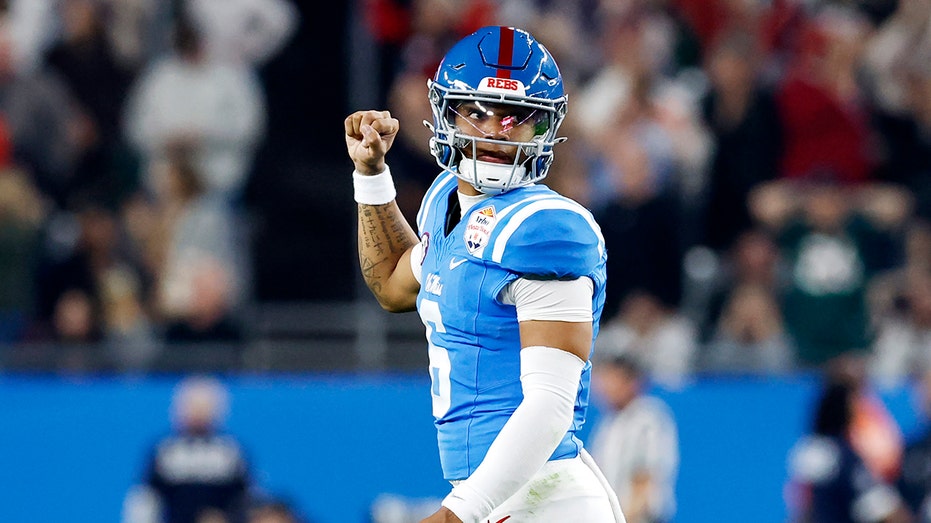
OXFORD, Miss. — Ole Miss quarterback Trinidad Chambliss has filed a lawsuit against the National Collegiate Athletic Association (NCAA) after the governing body denied his request for a sixth year of eligibility. The dispute centers on the NCAA’s rejection of Chambliss’s waiver application, which was submitted in November 2025, seeking to extend his five-year Division I eligibility clock due to an incapacitating illness.
Chambliss’s legal team is petitioning a Mississippi court for a preliminary injunction that would allow the quarterback to participate in another collegiate football season. The NCAA formally declined his request on January 9, 2026, citing a lack of sufficient medical evidence to prove that Chambliss suffered an incapacitating injury or illness during the 2022 season.
During that year, Chambliss was unable to play for Division II Ferris State University because of apparent respiratory issues. However, the NCAA found that neither Chambliss nor his teams provided adequate documentation to support the claim that his absence was due to a medical condition warranting an additional year of eligibility. This decision has sparked controversy, as Chambliss was a pivotal player for Ole Miss, which narrowly missed advancing to the NCAA semifinal in the 2025 season.
According to NCAA guidelines, extending eligibility beyond the standard five-year window requires clear evidence of a season lost to incapacitating injury or illness. The NCAA’s ruling reflects the strict adherence to these policies, which are designed to maintain fairness and competitive balance across collegiate sports. Chambliss’s case highlights the challenges athletes face when navigating the complex eligibility rules set forth by the NCAA.
Legal experts note that the lawsuit could set a precedent for how medical documentation is evaluated in eligibility cases moving forward. The NCAA’s decision process and the transparency of medical reviews have been subjects of scrutiny in recent years, especially as athletes increasingly seek additional eligibility due to injuries or other health-related absences.
Chambliss’s attorneys argue that the NCAA’s denial overlooks critical medical evidence and that the quarterback deserves the opportunity to compete for a sixth season. They contend that the respiratory issues that sidelined Chambliss were severe enough to warrant the extension, emphasizing the impact on his athletic career and future prospects.
Ole Miss has expressed support for Chambliss throughout the process, underscoring his importance to the program and the team’s aspirations. The case is now pending before a Mississippi judge, who will determine whether to grant the preliminary injunction allowing Chambliss to return to the field.
For more information on NCAA eligibility rules and waiver processes, visit the NCAA official site. Details on collegiate athlete health policies can be found at the Centers for Disease Control and Prevention. The legal framework surrounding student-athlete rights is explored by the American Bar Association. Updates on the case and collegiate sports rulings are regularly reported by the ESPN College Football section, a leading sports news outlet.
As the legal battle unfolds, the outcome will be closely watched by collegiate athletes and institutions nationwide, potentially reshaping how eligibility disputes are resolved in the future.