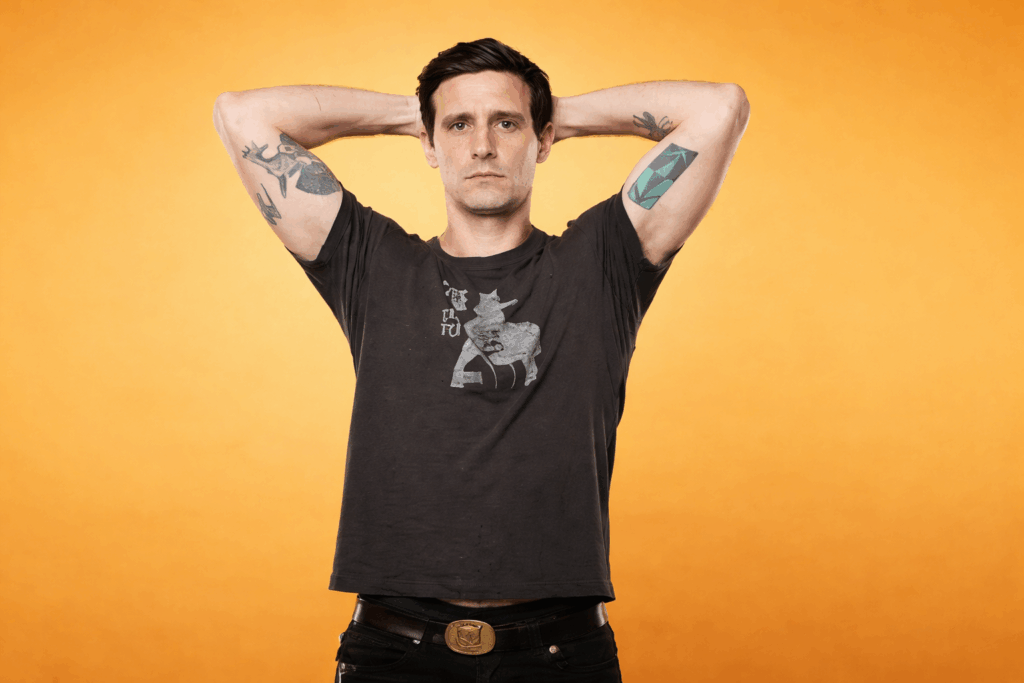
Actor James Ransone, whose career spanned over two decades in television, independent film, and major studio releases, has died. He was 46.
The Los Angeles County Medical Examiner’s Office said in online records that Ransone died by suicide on Friday. Further details surrounding his death were not immediately released. Messages seeking comment were left Sunday. They were sent to Ransone’s representatives and to a spokesperson with the medical examiner’s office.
Ransone was best known for his portrayal of Chester “Ziggy” Sobotka on HBO’s acclaimed drama The Wire. Although appearing primarily in the show’s second season, his nuanced depiction of the troubled son of a union leader on Baltimore’s docks made Ziggy one of the series’ most notable figures. Ransone’s performance, marked by vulnerability and depth, has been widely reassessed over time as one of the most emotionally impactful in the series.
In addition to his work on The Wire, Ransone built a diverse résumé that crossed genres and formats. His film credits included It: Chapter Two, in which he played an adult version of Eddie Kaspbrak, as well as The Black Phone and its sequel, Black Phone 2. He also appeared in films such as Tangerine, Sinister, Mr. Right, and Starlet, often gravitating toward characters marked by emotional complexity or inner conflict.
On television, Ransone appeared in series including Bosch and Generation Kill. More recently, he appeared in Poker Face. His final on-screen performance aired earlier this year. According to The Movie Database, the appearance marked the closing chapter of a career defined by versatility and a willingness to take creative risks.
Born in Baltimore in 1979, Ransone attended the George Washington Carver Center for Arts and Technology. He later credited that experience with giving him direction during a difficult adolescence. In a 2016 interview with Interview magazine, Ransone spoke openly about feeling alienated growing up. “I did not fit in well with all of the kids,” he said. “Adolescence was a really hard time for me — as I think it is for most kids.” He added that discovering an arts-focused education was life-changing. “I think it saved me as a kid. Going to arts school saved me.”
Ransone later attended film school in New York, though he acknowledged that he struggled with structure and consistency early in his adult life. In that same interview, he spoke candidly about addiction and recovery, revealing that he became sober at 27 after years of heroin use. “I woke up at 27 after being on heroin for five years,” he said. “It was like I sobered up and I realized: ‘My job is being an actor. This is crazy!
That period of sobriety coincided with his work on Generation Kill. Ransone later described the project as transformative on a personal level. His father was a Vietnam War veteran. Being surrounded by Marines while filming helped him better understand his family history and his own identity. “A lot of things started to make sense to me in a different way,” he said. “It didn’t do so much for my career, but it shaped me and the way that I think about my life.”
In recent years, Ransone continued to speak openly about trauma, recovery, and survival, including publicly sharing that he was a survivor of sexual abuse. Fans and colleagues alike have since highlighted that honesty as a defining part of his legacy, noting that his willingness to discuss difficult subjects helped others feel less alone.
Following news of his death, tributes from fellow actors, filmmakers, and fans poured in across social media, remembering Ransone as a fearless performer who brought empathy and depth to even his most flawed characters. While his career included both mainstream and independent successes, many noted that his greatest impact came from the emotional truth he brought to his work.
Ransone is survived by his wife and two children.
If you or someone you know is struggling, help is available in the United States by calling or texting 988, the Suicide & Crisis Lifeline, or visiting https://988lifeline.org. Additional resources: https://www.speakingofsuicide.com/resources.